


0
The global race to capitalize on artificial intelligence has reshaped Asia's investment landscape, helping Taiwan and South Korea leapfrog India in global equity market rankings within just one week.
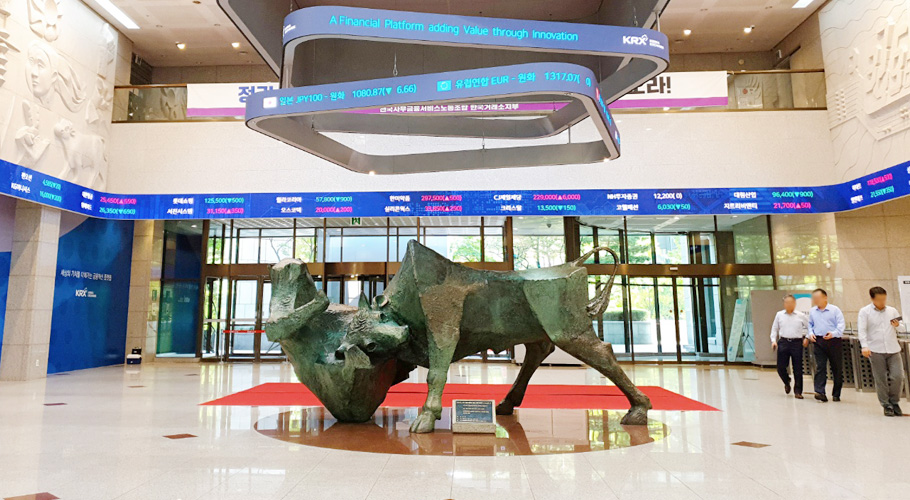
Technology giants linked to the AI supply chain, including TSMC, Samsung and SK Hynix, have attracted massive investor interest in 2026, pushing valuations to unprecedented levels. The surge has boosted both Taiwan and South Korea's stock markets, while India has struggled to maintain investor confidence amid slowing domestic growth and earnings concerns.
Foreign investors have continued to pull money out of Indian equities, selling $27.6 billion worth of shares since January. By comparison, net foreign outflows totaled $18.9 billion throughout all of 2025, according to data from the National Securities Depository Limited (NSDL).
The shift has been reflected in market capitalisation rankings. Taiwan's stock market value approached $5 trillion and overtook India on 26 May to become the world's fifth-largest equity market. Less than a week later, South Korea also moved ahead of India, pushing the country into seventh place among global equity markets.
The reversal is striking considering India's dominant position only 18 months ago. Bernstein analysts noted that India's market capitalisation was approximately 3.5 times larger than South Korea's and more than double Taiwan's during that period.
For much of the past decade, India was regarded as one of the world's most attractive equity markets. However, investor sentiment has shifted dramatically as concerns grow over slowing consumption, weaker corporate earnings and elevated valuations.
Unlike Taiwan and South Korea, India lacks a major publicly listed artificial intelligence or semiconductor champion. The AI boom has become one of the market's most powerful investment themes, with investors increasingly concentrating capital in companies expected to benefit directly from growing demand for advanced chips and AI infrastructure.
The performance gap has been substantial. Since the start of the year, South Korea's Kospi 200 index has surged more than 130%, while Taiwan's FTSE TWSE 50 has gained over 60%. In contrast, India's benchmark stock indices have declined more than 10%, making them the only major Asian market currently in negative territory.
Analysts argue that India's absence from the AI supply chain has reduced its appeal relative to regional peers. The country has yet to develop a significant semiconductor manufacturing ecosystem, while many of its technology companies remain focused on traditional IT services rather than capital-intensive AI initiatives.
However, market experts caution that the lack of an AI story is not the sole reason behind the decline in investor interest.
Valuations remain a major concern. Indian stocks are currently trading at approximately 21 times forward earnings, according to Alpine Macro data. That valuation is broadly comparable to Taiwan but significantly higher than South Korea, where equities trade at roughly nine times forward earnings.
Corporate earnings expectations have also weakened. Nomura recently reduced its earnings forecasts for the 256 largest Indian companies it covers by 4% for the financial year ending March 2027. The downgrade reflects concerns over higher input costs and economic disruption linked to ongoing tensions in the Middle East.
The changing sentiment is also visible within global benchmarks. India's weighting in the MSCI index has fallen to around 11%, down sharply from nearly 20% at its peak in 2024.
Beyond near-term geopolitical risks, investors are increasingly focused on structural challenges facing the Indian economy. Rising automation and advances in robotics are reducing the advantages traditionally associated with India's large pool of low-cost labour. At the same time, the rapid adoption of artificial intelligence is creating uncertainty about the long-term growth prospects of parts of the country's IT services industry.
While an easing of tensions in the Middle East could improve market conditions, analysts believe concerns surrounding valuations, earnings growth and India's position in the AI-driven economy may continue to weigh on foreign investor sentiment in the months ahead.
Disclaimer: The information contained herein (1) is proprietary to BCR and/or its content providers; (2) may not be copied or distributed; (3) is not warranted to be accurate, complete or timely; and, (4) does not constitute advice or a recommendation by BCR or its content providers in respect of the investment in financial instruments. Neither BCR or its content providers are responsible for any damages or losses arising from any use of this information. Past performance is no guarantee of future results.
More Coverage



Risk Disclosure: Trading Contracts for Difference on margin carries a high level of risk, and may not be suitable for all investors. By trading Contracts for Difference, you could sustain a loss of all your deposited funds. BCR makes no recommendations as to the merits of any financial product referred to on our website, emails, or related material(s). The information contained on our website, emails, or related material(s) does not take into consideration prospective clients' trading objectives, financial situations, or investment needs. Before deciding to trade the Contracts for Difference offered by BCR, please ensure that you have read our Product Disclosure Statement , Financial Services Guide , Target Market Determination and have sought independent professional financial advice to ensure you fully understand the risk involved before trading.
"BCR" is a registered business name of Bacera Co Pty Ltd, Australian Company Number 130 877 137, Australian Financial Services Licence Number 328794.
Business Address: Suite 3, Level 18, 201 Elizabeth Street, SYDNEY NSW 2000 | Registered Address: Level 1, 6-10 O'Connell Street, SYDNEY NSW 2000
The information on this site is not directed at residents of any particular country outside of Australia and is not intended for distribution to, or use by, any person in any country or jurisdiction where such distribution or use would be contrary to local law or regulation.


 English
 简体中文
简体中文
 繁體中文
繁體中文
 Bahasa
Melayu
Bahasa
Melayu
 Tiếng
Việt
Tiếng
Việt
 ไทย
ไทย
 日本語
日本語
 한국어
한국어
 ភាសាខ្មែរ
 español